Estudar
Study to remember on exam day — not just on the day you study.
An open-source study system that follows what learning research shows actually works, and measures what you know unaided.
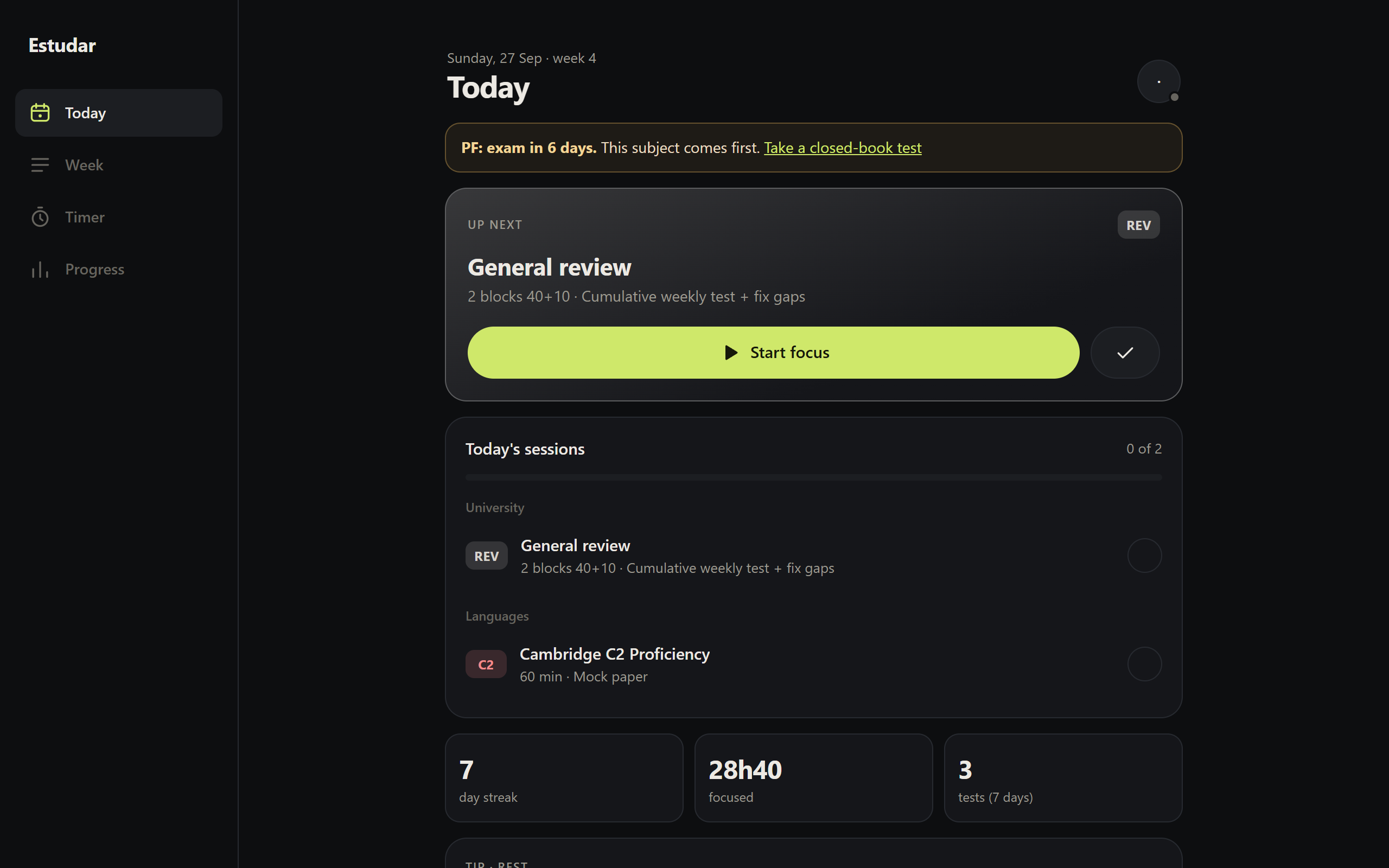
AI weekly plan
Enter your subjects, exam dates and free hours; the AI builds the week around retrieval, spacing and interleaving. The app checks the result before you save it.
Focus mode
Full-screen 40+10 blocks, screen kept awake, and a timer that survives your phone killing the app halfway through.
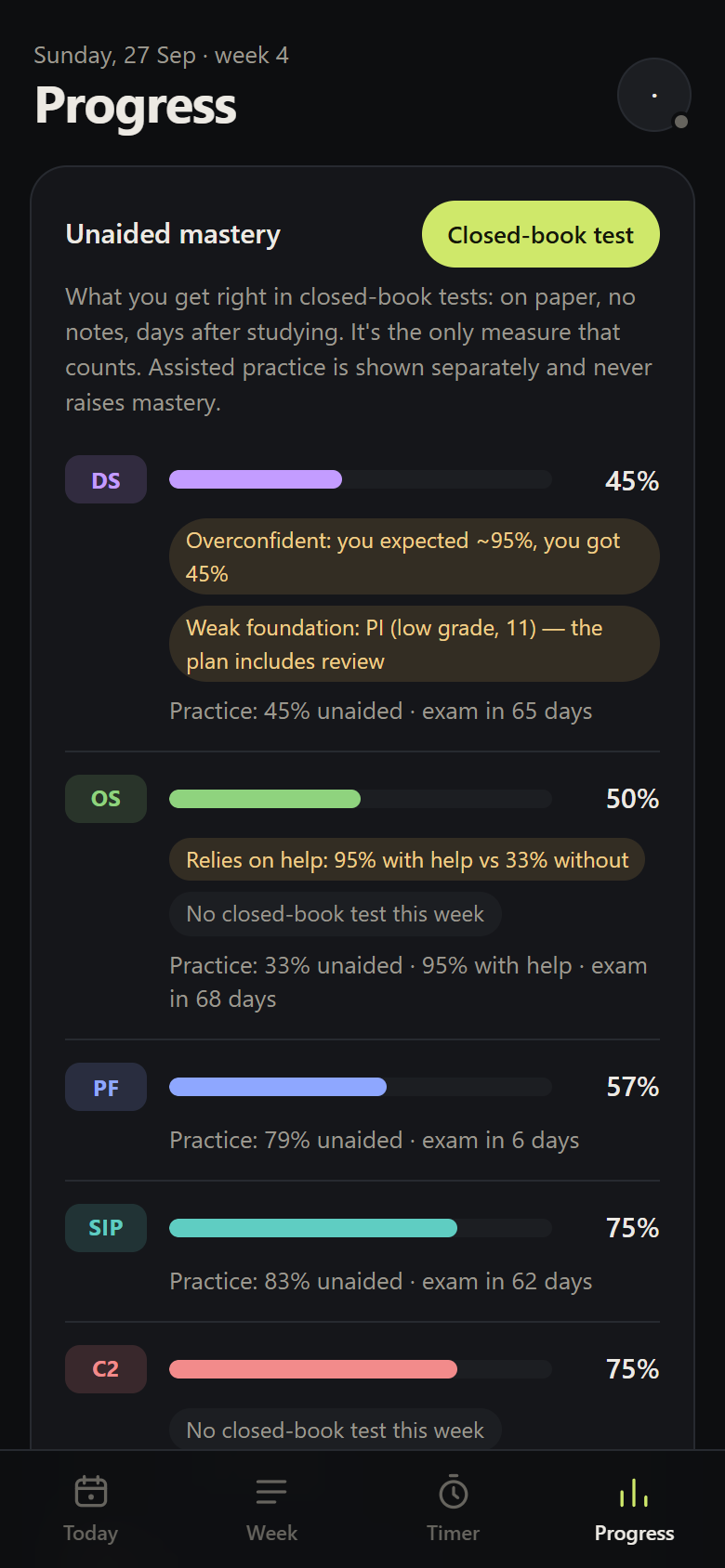
Unaided mastery
Your level comes from closed-book tests on paper — not from hours, nor from what you get right with help.
Confidence calibration
You say how sure you are before checking. Subjects where your confidence fools you rise to the top.
Degree record
Averages per year and semester, weighted assessments with minimum grades, resits and special periods, prerequisites. Import your curriculum from a photo.
Set everything up in the app
Keys, database tables and publishing to Cloudflare from one screen, with a green dot per service. Runs on your PC or anywhere, for free.
The problem
Most study tools measure what is easy to measure: hours, sessions, streaks. But research shows that performance while studying is a poor signal of learning:
- Rereading feels like more mastery than testing yourself — and yields less a week later (Roediger & Karpicke, 2006).
- Practising one problem type at a time gives better results in practice and much worse ones on the test (Rohrer & Taylor, 2007).
- With an AI tutor that hands out answers, performance with help goes up and performance without help goes down (Bastani et al.).
And university adds more: weighted assessments with minimum grades, resits, ECTS credits, an average to keep up — which no Pomodoro app knows about.
The solution
Estudar organises your week and guides each session, but measures learning by delayed, unaided retrieval: closed-book tests on paper, taken days after you studied. Everything else — time, AI-assisted practice or notes — is shown separately and never raises your mastery.
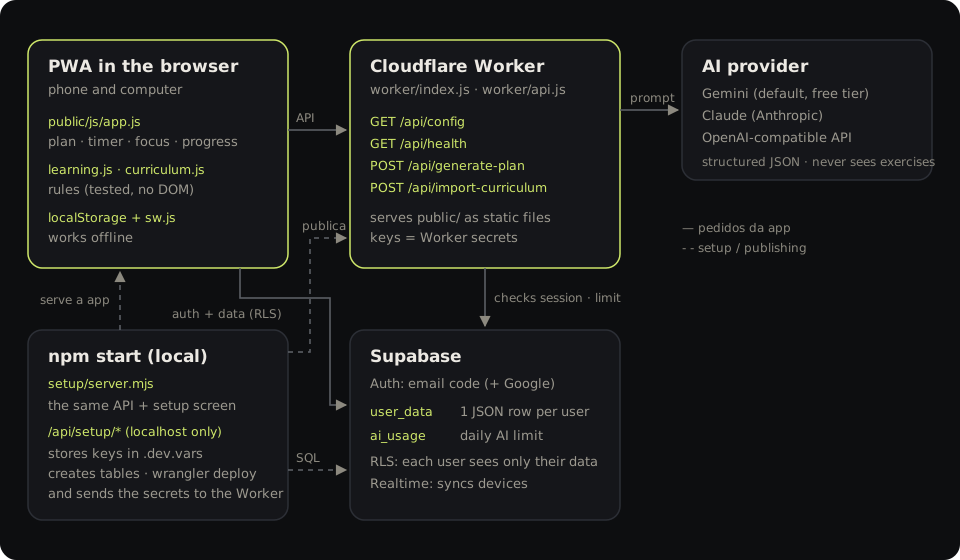
The app is a PWA with no build step. A single Cloudflare Worker serves the app and the API (with the keys as secrets), Supabase stores accounts and data with per-user rules, and the AI is whichever you choose. Hosting costs nothing on the free tiers.
A day with Estudar
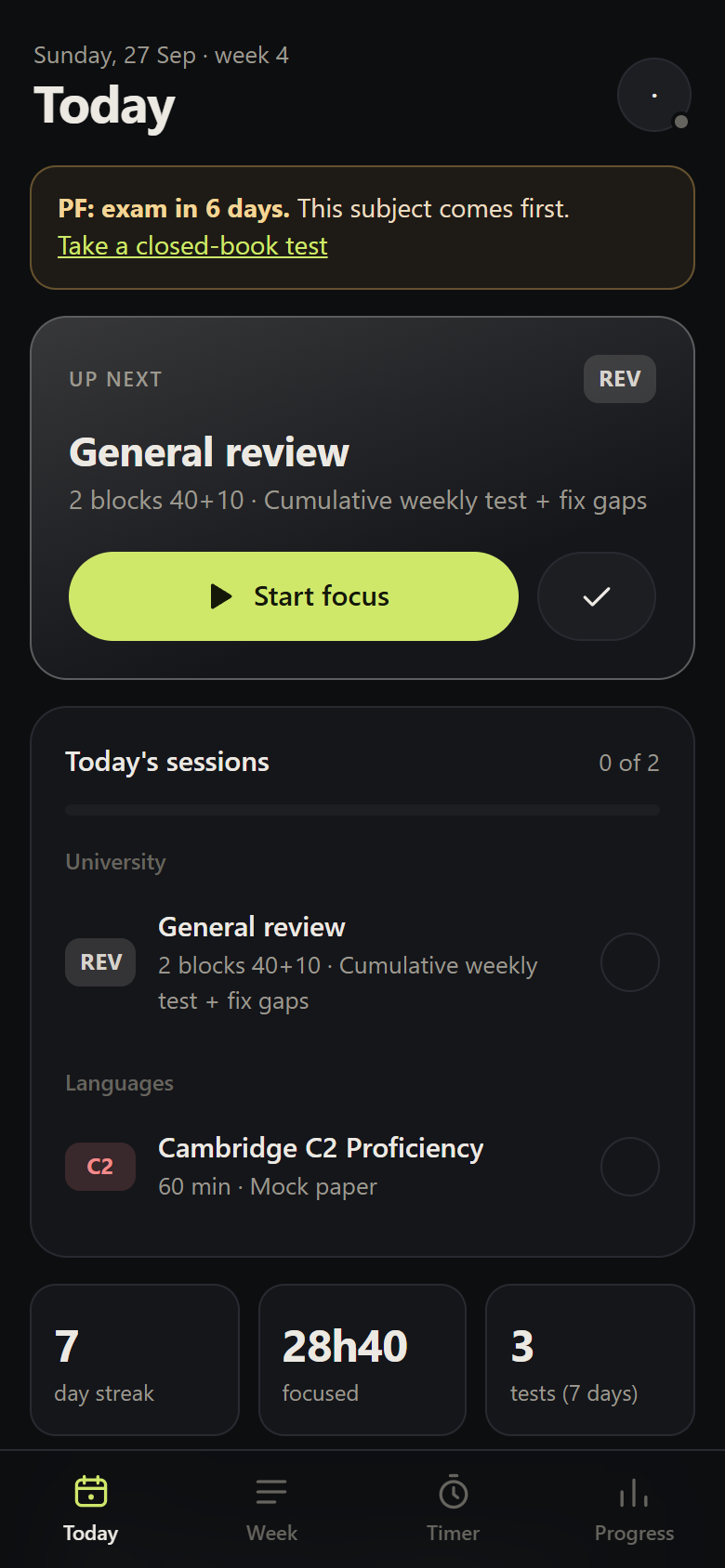
1. Today
See what comes next and any exam warnings. One tap starts focus.
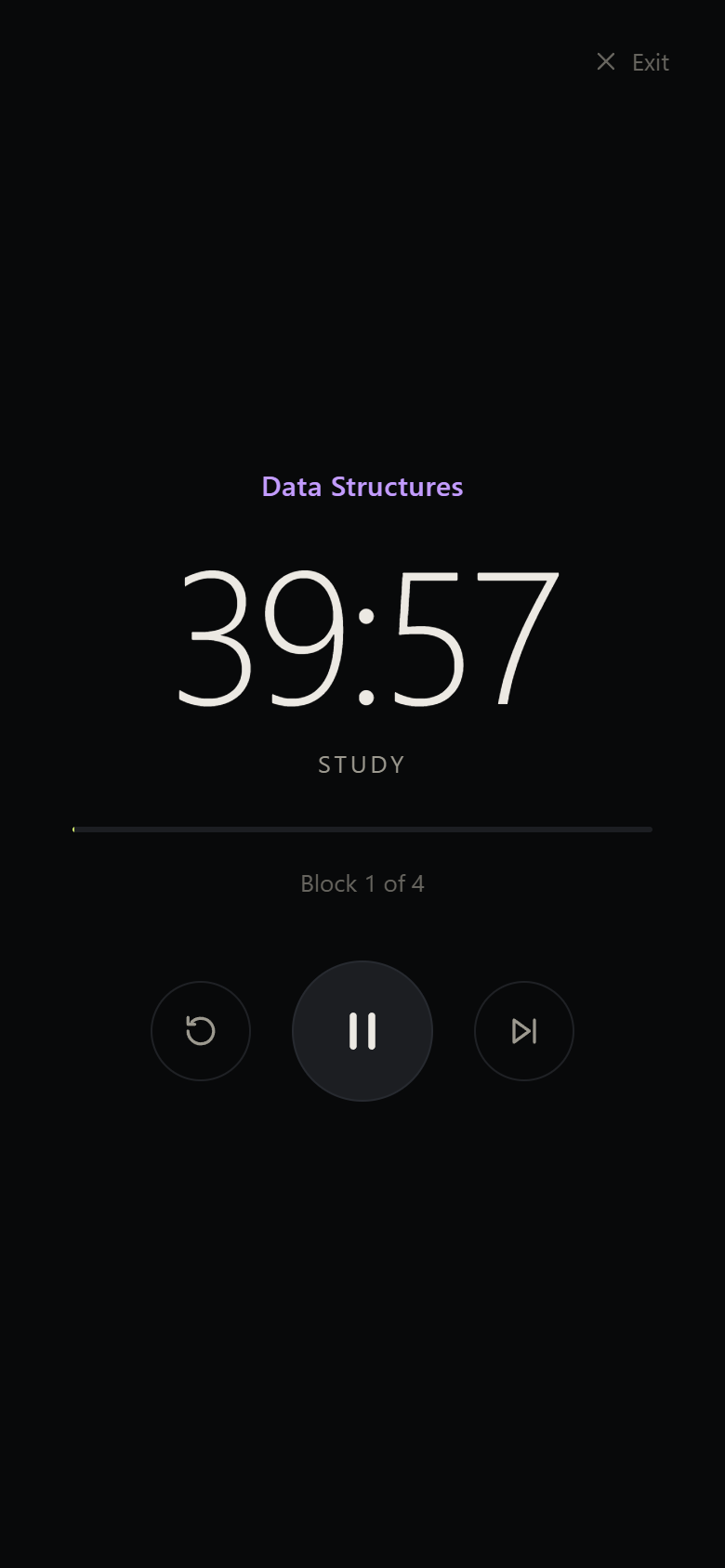
2. Focus
Full screen, no distractions. The block counts real time, even with the screen locked.
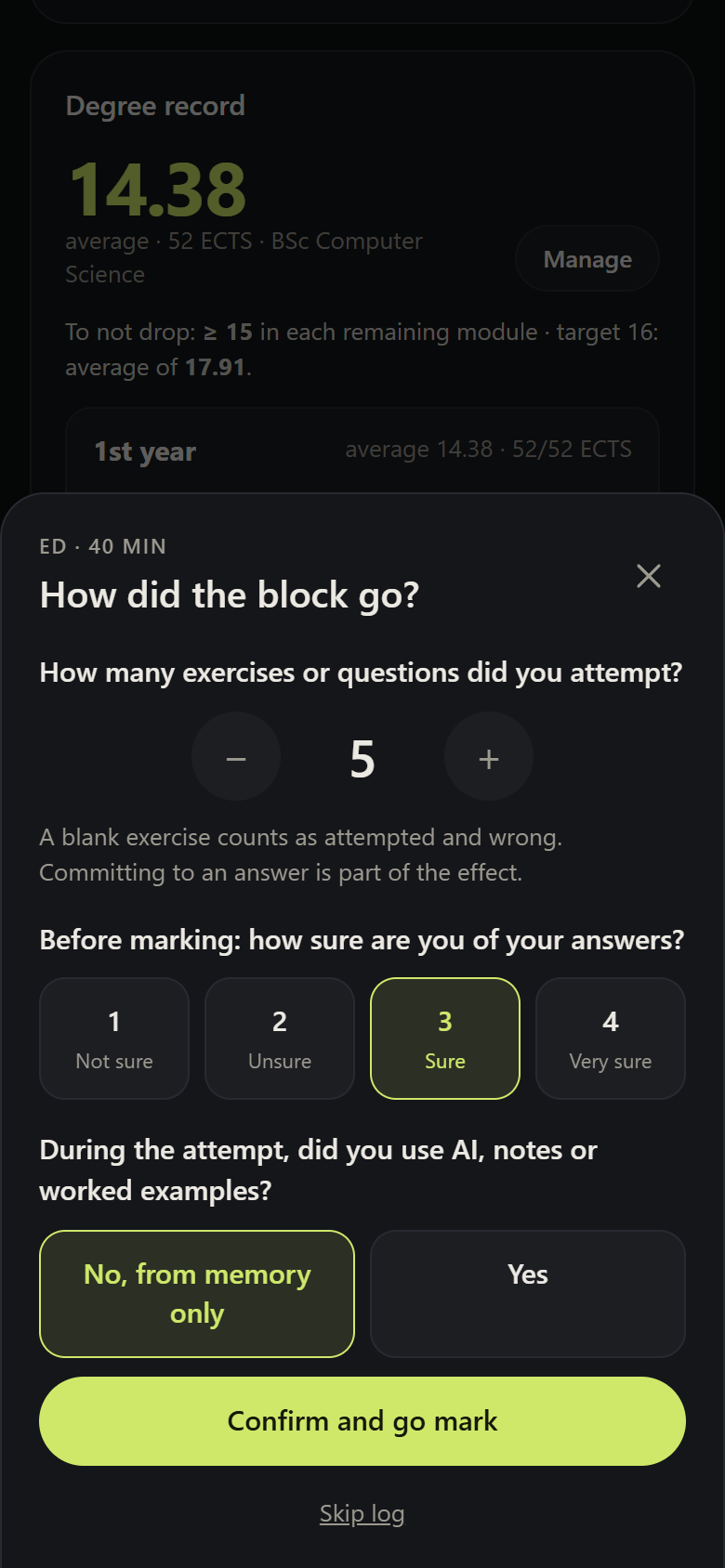
3. Log
At the end, what you attempted and how sure you are — before checking. Only then the score.
4. Progress
Mastery measured unaided, with overconfidence and reliance on help in plain view.
The science behind it
| Principle | Evidence | In Estudar |
|---|---|---|
| Test yourself instead of rereading | Roediger & Karpicke (2006); Karpicke & Blunt (2011) | Block log and closed-book tests; the plan proposes active tasks. |
| Space it out until the exam | Ebbinghaus (1885); Cepeda et al. (2006, 2008) | Each subject on several days; the day before is review only; the final week gets priority. |
| Interleave | Rohrer & Taylor (2007) | Mixed exercises and cross-reviews in the plan. |
| Distrust fluency | Bjork (1994); Dunlosky et al. (2013) | Confidence vs. score; rereading, highlighting and summarising are not study modes. |
| AI after you try | Bastani et al. | The AI organises the plan and never solves exercises; assisted practice never counts towards mastery. |
The evidence supports the principles; the concrete plan is always checked by fixed rules and adjusted with your own results. See principles R1–R9 and what is implemented →
Quick start
1. Run it on your computer
npx estudar # opens http://localhost:8787You need Node.js 20 or newer. With nothing else, the app already works in local mode (data stays in the browser).
2. Connect Supabase and the AI — inside the app
In Account → Server & keys, paste your Supabase URL and AI key (Gemini has a free tier). One button creates the tables; the status panel turns green.
3. Publish to Cloudflare
Connect Cloudflare account → Publish. The app goes live at https://estudar.<your-account>.workers.dev, installable on your phone. Full guide →
Comparison
| Feature | Estudar | Pomodoro apps | Anki | Notion templates |
|---|---|---|---|---|
| Focus timer (Pomodoro) | ✅ | ✅ | — | ◐ |
| Weekly plan per subject | ✅ | — | — | ✅ |
| Plan generated with evidence-based rules | ✅ | — | — | — |
| Spaced repetition of flashcards | — | — | ✅ | — |
| Mastery measured unaided | ✅ | — | ◐ | — |
| Confidence vs. score (calibration) | ✅ | — | — | — |
| Assessments, exam periods and resits | ✅ | — | — | ◐ |
| ECTS-weighted average and target | ✅ | — | — | ◐ |
| Phone ↔ PC sync | ✅ | ◐ | ✅ | ✅ |
| Works offline (PWA) | ✅ | ◐ | ✅ | ◐ |
| Your data, your server | ✅ | — | ◐ | — |
| Open source | ✅ MIT | ◐ | ✅ | — |
◐ = partial, or depends on the app/template. Anki is excellent for flashcards and complements Estudar: one organises the week and measures mastery per subject, the other schedules card reviews.
Contribute
Estudar is open source (MIT). If it helped you study better, leave a ⭐ on the repository so others can find it, or open an issue with what is missing.
Support the project
Estudar is free and will stay free. If it saved you time — or a module — a coffee helps keep it going and pays for the development hours.

 Or scan the code with your phone